Short answer: A tile shade variation complaint is easiest to settle when the dealer records it with the invoice number, the batch or shade number printed on the box, the boxes affected and photos, and the factory traces that batch in its stock. If the order was filled from two batches, that is the cause. Settle by replacing from one batch, a credit, or closing with a reason, and stop the next one by filling each order from a single batch.
Dealers in Ahmedabad, Rajkot and across Gujarat see shade complaints after tiles are laid, when the fix costs most. This guide covers what to record, how to trace and settle it, and how to prevent it. For the stock side, see ceramic stock management for tile factories.
Why does tile shade variation happen?
Tiles from different production batches can differ slightly in shade, even in the same design and grade. Factories mark each batch or shade on the box for this reason. Complaints happen when:
One order is filled from two batches to make up the quantity.
A dealer adds boxes from showroom stock of another batch.
A buyer orders more later and gets a new batch.
Boxes from different batches are mixed on site before laying.
What should a dealer record in a shade complaint?
Record enough for the factory to trace it without a site visit.
Invoice number and date: from the bill
Design, size, grade: from the box
Batch or shade number: printed on each box
Boxes affected: how many, from which batches
Laid or not laid: changes how it can be settled
Photos: in daylight, boxes and floor
How should a shade variation complaint be settled?
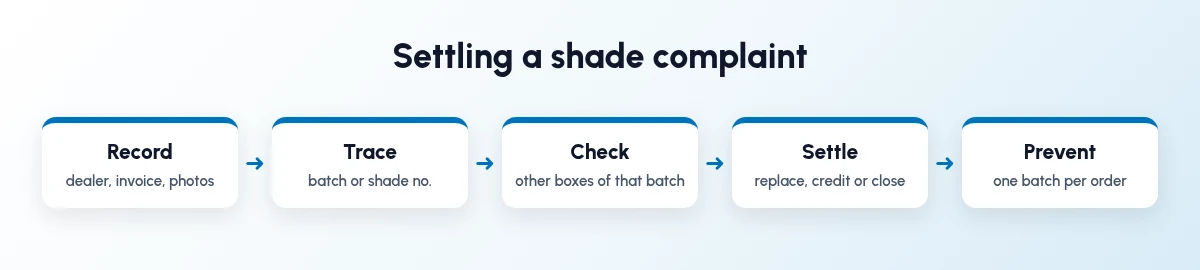
Follow the same steps every time, so dealers know what to expect.
Record it with the fields above.
Trace the batch in the factory's stock and dispatch records.
Check the other boxes of that batch still in stock.
Settle it: replace from one batch, credit, or close with a reason.
Prevent it: fill the next order from a single batch.
How can dealers and factories prevent shade complaints?
Most of the prevention is in how orders are filled and sold.
Book a large order against one batch when it is confirmed.
Tell the buyer to order a few extra boxes from the same batch.
Keep showroom stock by batch, and do not mix batches in one sale.
Ask the site to check batch numbers before laying.
How does Sales Automation Suite help trace shade variation?
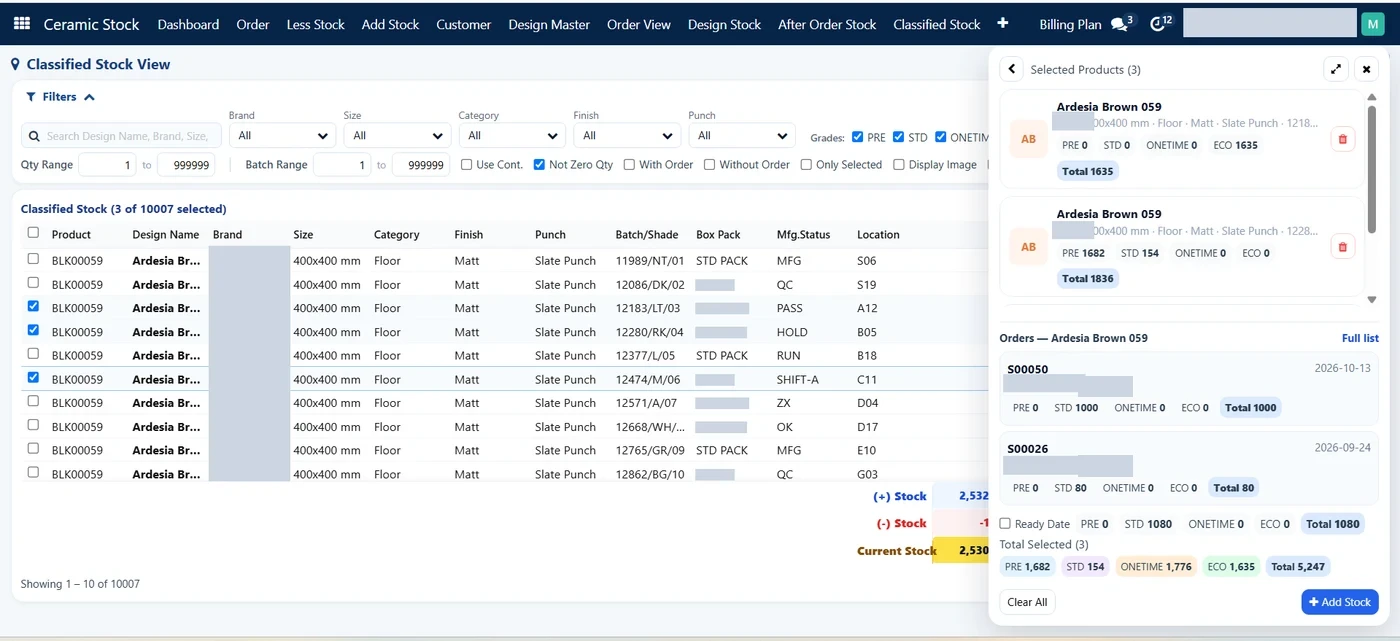
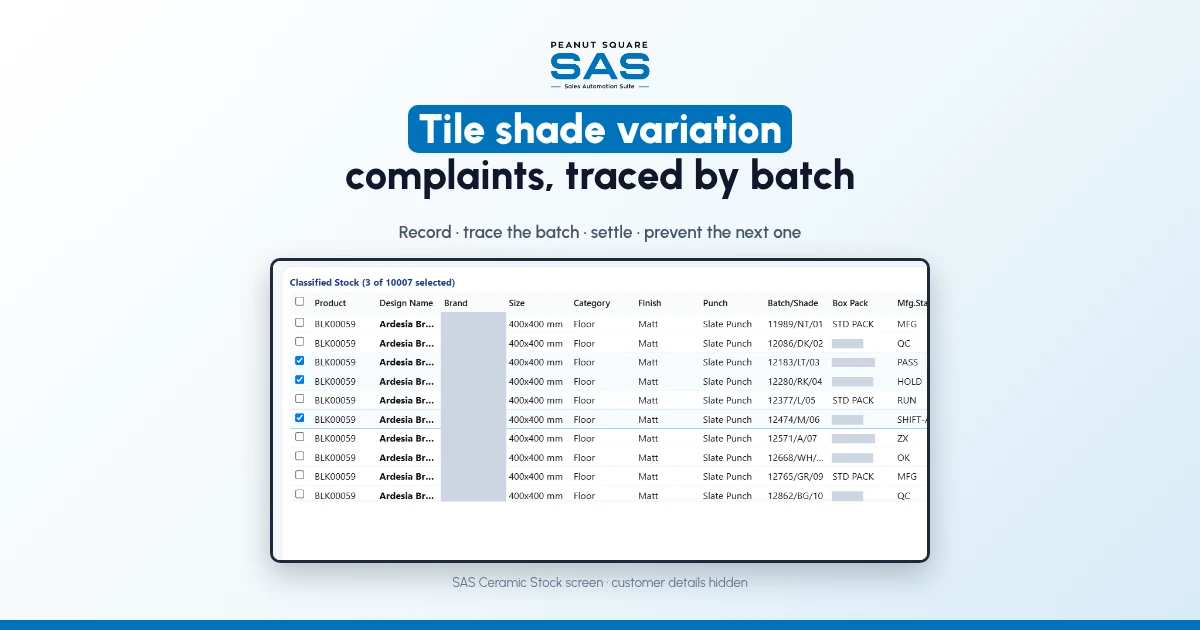
SAS Classified Stock: one design by batch or shade, with location. Brand hidden.
Sales Automation Suite (SAS) from Peanut Square is one ERP and CRM built for how India sells. It is meant for Indian B2B sellers who outgrow a CRM-only stack: India lead portals and WhatsApp are on the pricing page, the price is in rupees, and it runs on Cloud or On-Premise.
In the SAS Ceramic Stock screens shared by Nishant Patel on 19 Oct 2026 (customer details hidden), After Order Stock and Classified Stock show each design by batch or shade number, with box pack, manufacturing status and grade quantities, and Classified Stock adds location. Less Stock exits carry the dealer, city, P.O. and invoice number. So a factory can see which batches of a design it holds and which went out on an invoice.
The SAS knowledge base covers the complaint dashboard, which shows complaints by status and dates, and lot numbers, where a lot refers to a batch. The SAS Complaint app page lists managing complaints by complaint type, by dealer and by status, with complaint types and statuses set in its configuration. Our post on ceramic CRM for samples, complaints and follow-ups covers the complaint flow, and the tile dealer stock management guide covers stock by batch for dealers.
On price: ₹300/user/month on Premium (40% off ₹500, GST extra, billed yearly).
SAS is built by Peanut Square in Ahmedabad, Gujarat. The SAS tile industry page lists ISO 9001:2015 and ISO 27001:2022.
To see it with your own process: Book a free demo at sas.peanutsquare.com
How should a tile dealer raise a shade variation complaint?
Send the factory the invoice number, design, size, grade, the batch or shade numbers on the boxes, how many boxes are affected, whether they are laid, and daylight photos.
Why do tiles of the same design differ in shade?
Tiles from different production batches can differ slightly in shade. That is why factories print a batch or shade number on each box.
How can a dealer avoid shade complaints?
Fill each order from one batch, keep showroom stock by batch, ask buyers to order a few extra boxes, and ask the site to check batch numbers before laying.
Who pays for a shade variation complaint?
It depends on your terms. Agree in writing with each factory how shade complaints are settled, by replacement or credit, before they happen.
Can SAS show stock by batch or shade?
Yes. The SAS Ceramic Stock screens show each design by batch or shade number and grade, in After Order Stock and Classified Stock (screens shared 19 Oct 2026).