Short answer: Outgrown CRM is when a growing business should move from CRM to ERP: leads sit on phones or portals, quotes live in spreadsheets, stock is checked by phone, and you see which source produced leads but not orders. Join leads, CRM, quotations, inventory and orders in one INR-priced system — Cloud or On-Premise.
Below: the day-off test, five signs, CRM-only vs ERP+CRM for India B2B, what to connect first, and how Sales Automation Suite fits.
Why does a CRM-only tool stop being enough?
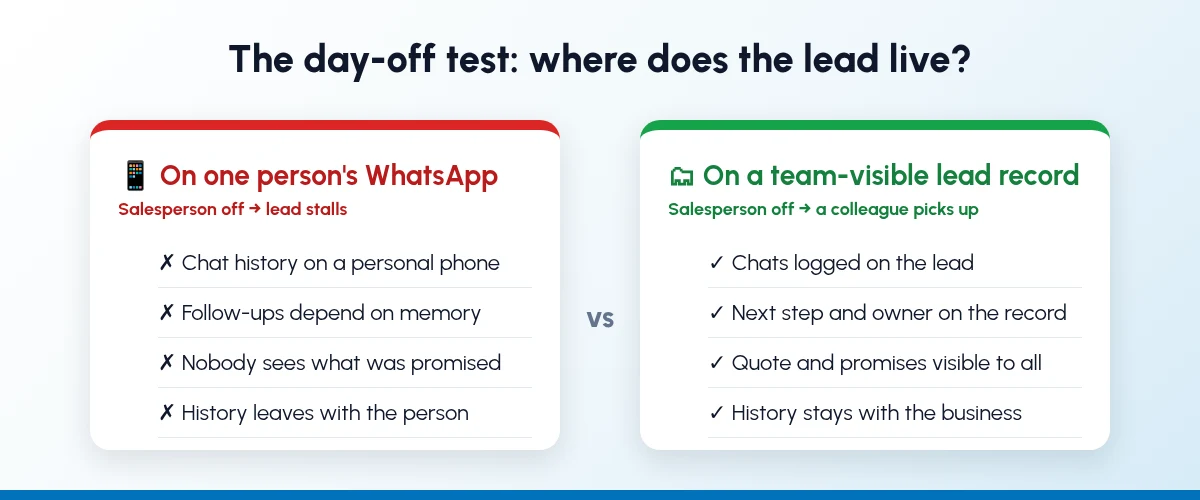
A CRM is good at holding contacts, stages and follow-ups. For a while, that is enough. Then the sell motion grows past the pipeline.
In India B2B, the next message after an IndiaMART or TradeIndia enquiry often lands on WhatsApp. Quotes get typed in Excel. Someone rings the store to ask if a SKU is in stock. The order is keyed into a different tool. The CRM still shows a neat funnel. The real work happens outside it.
Ask one question: what happens when your best salesperson takes a day off?
If leads stall because chats live on their phone, personal habits decide who gets followed up, and nobody else can see what the buyer was promised, the problem is not the person. It is a CRM-only setup that never became the system of record.
That day-off test is the earliest, and most honest, signal that you have outgrown CRM as a standalone tool.
What are the clear signs you have outgrown CRM?
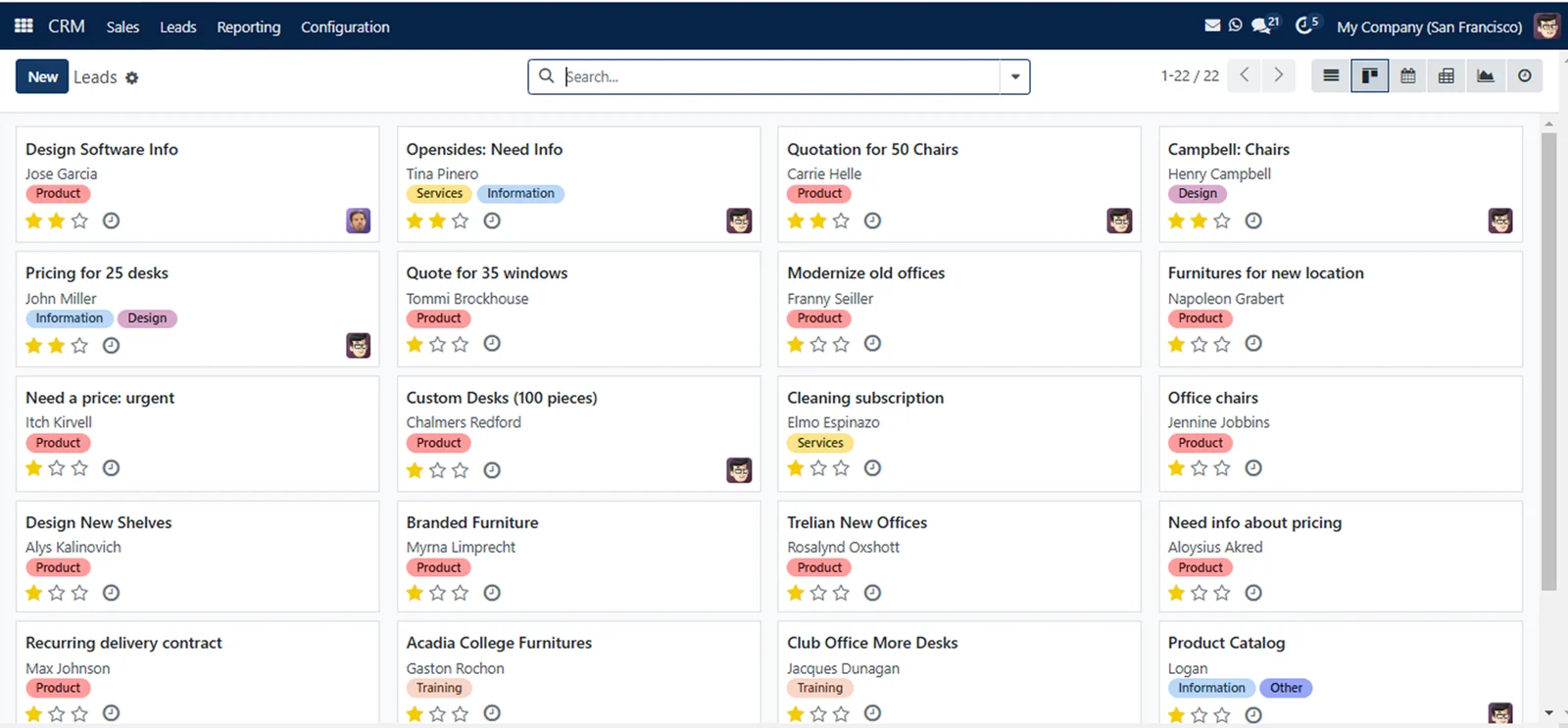
These signs show up as ordinary friction. Any two or three together usually mean it is time to plan a move.
1. Your best salesperson takes a day off and leads stall
Follow-ups depend on one person's WhatsApp and memory. When they are out, enquiries wait. Colleagues cannot pick up the thread because the history is not on the lead record.
2. Quotes, stock and orders live in different places
The CRM holds the lead. The quotation is a spreadsheet. Stock is checked by phone or in a separate inventory app. The sales order is typed again in billing. Every hop is a chance to mistype a price, promise stock you do not have, or lose the link between the enquiry and the invoice.
3. India lead sources land in different inboxes
IndiaMART, TradeIndia, JustDial, Meta forms and WhatsApp each have their own place to check. Someone has to open every portal, copy the enquiry, and assign it by hand. Afternoon leads sit until the next morning because nobody opened that tab.
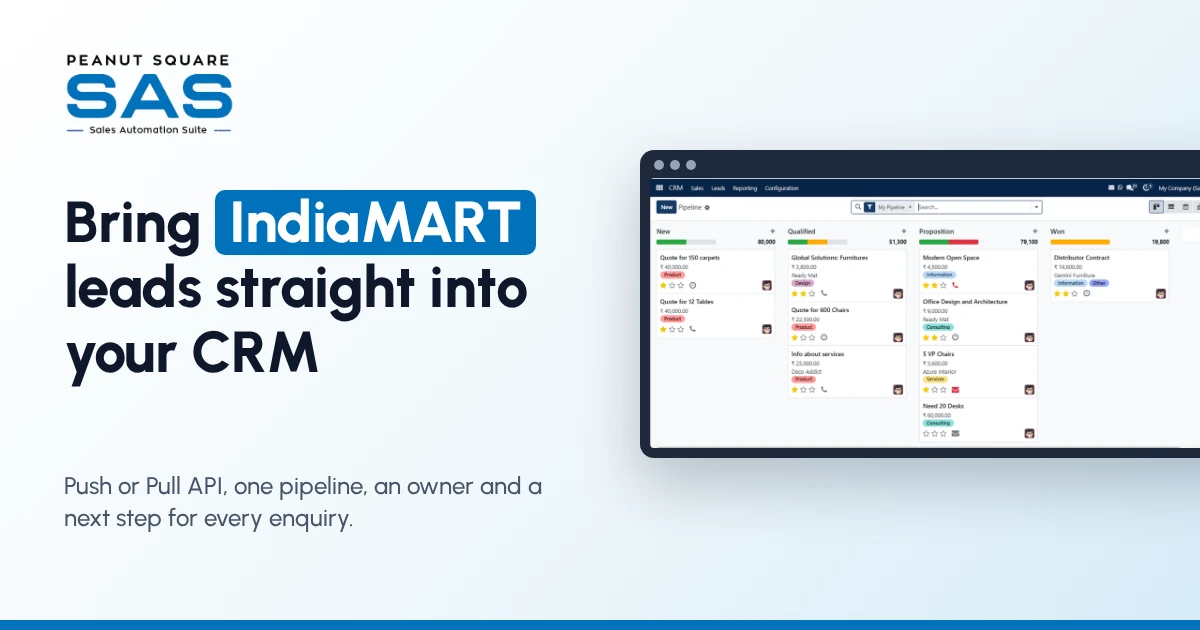
Bringing portal leads into one pipeline is the first fix. Our guide on IndiaMART CRM integration covers how paid sellers can push or pull IndiaMART enquiries into a CRM. For WhatsApp chats that still live on personal numbers, see WhatsApp CRM automation.
4. Inventory, manufacturing or POS is not connected to the pipeline
You close a deal in the CRM, then discover the warehouse cannot ship this week, or the shop floor never saw the order. A CRM-only tool was never meant to carry stock levels, production jobs or point-of-sale. When those operations matter to what you promise buyers, the pipeline and the operations stack need the same system.
5. You can report on leads by source, but not on orders by source
Dashboards show which portal or ad produced enquiries. They cannot show which source produced paid orders, because the order never sat on the same record as the lead. Without that link, you keep spending on lead volume and guessing which channels pay for themselves.
If several of these are true, you have outgrown CRM as a standalone layer. The next step is not a bigger CRM. It is joining CRM with the steps that turn a lead into an order.
CRM vs ERP+CRM for growing India B2B sellers
CRM-only tools are built around contacts, pipelines and activity. USD seat CRMs often price for a global SaaS buyer. Open-source ERPs can cover operations deeply, but many India B2B teams still bolt India lead portals and WhatsApp on afterwards.
ERP+CRM means the lead, quotation, stock check and order share one workspace:
Where do IndiaMART / TradeIndia / JustDial / Meta / WhatsApp leads land? CRM-only: Separate portals or imports. ERP+CRM: Same pipeline as other sources.
Where is the quotation? CRM-only: Spreadsheet or another app. ERP+CRM: Linked to the lead.
Can you check stock before promising a date? CRM-only: Phone or separate inventory. ERP+CRM: Same system as the deal.
Can you see which source produced orders? CRM-only: Usually not. ERP+CRM: Yes, if lead → quote → order stay linked.
Deployment CRM-only: Often cloud SaaS only. ERP+CRM: Cloud or On-Premise, depending on the product.
You do not need every ERP module on day one. You need the path from enquiry to order to stop crossing tools.
What should you move next: leads → quote → stock → order?
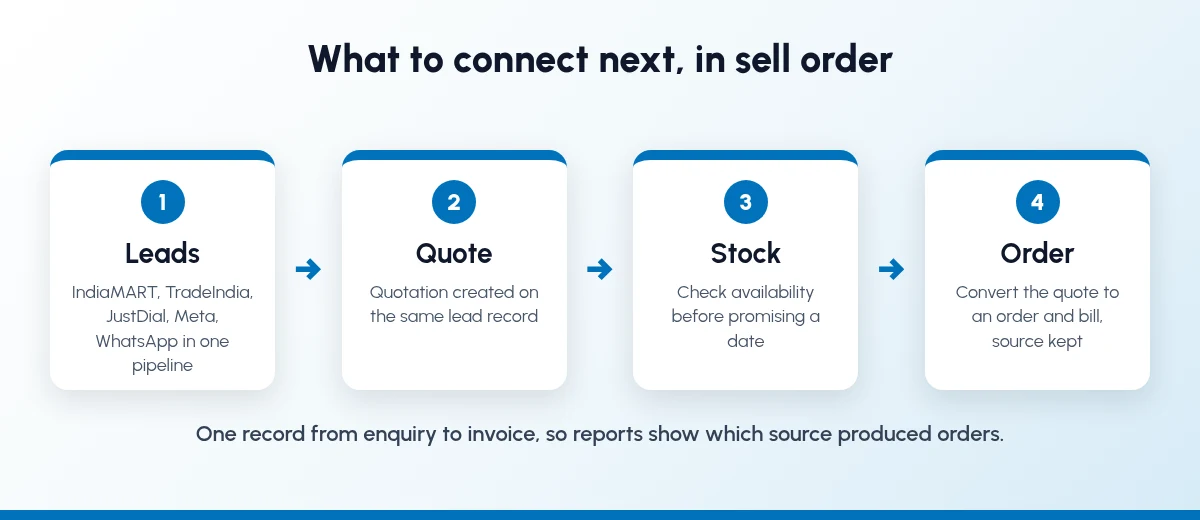
When teams have outgrown CRM, migrate in the order of the sell motion, not a module catalogue.
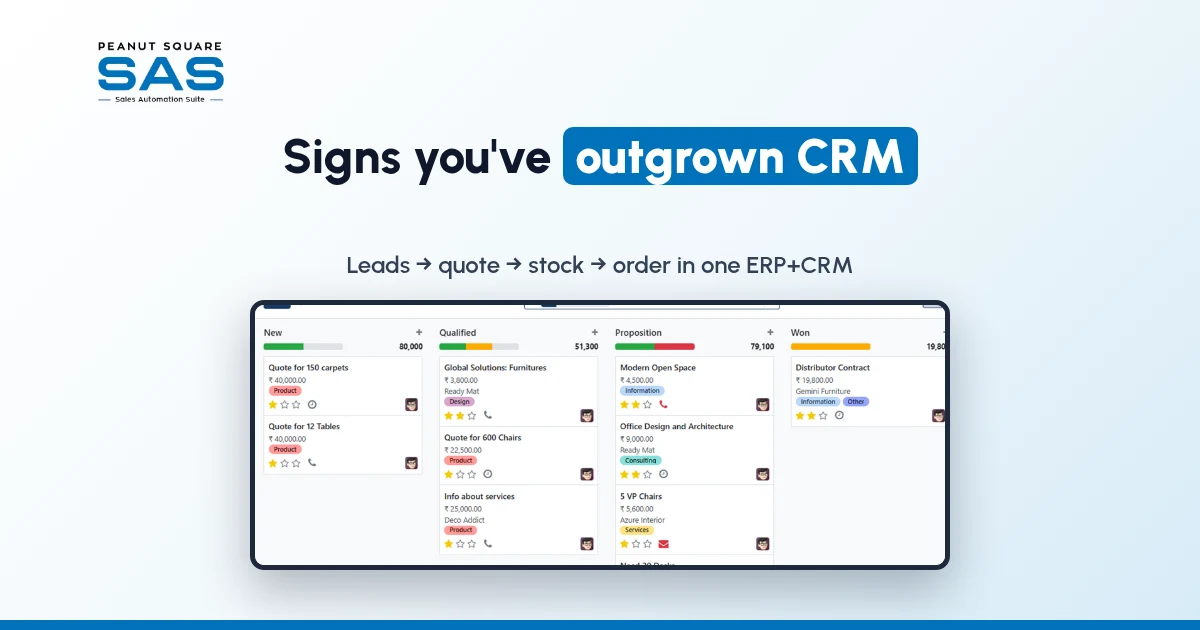
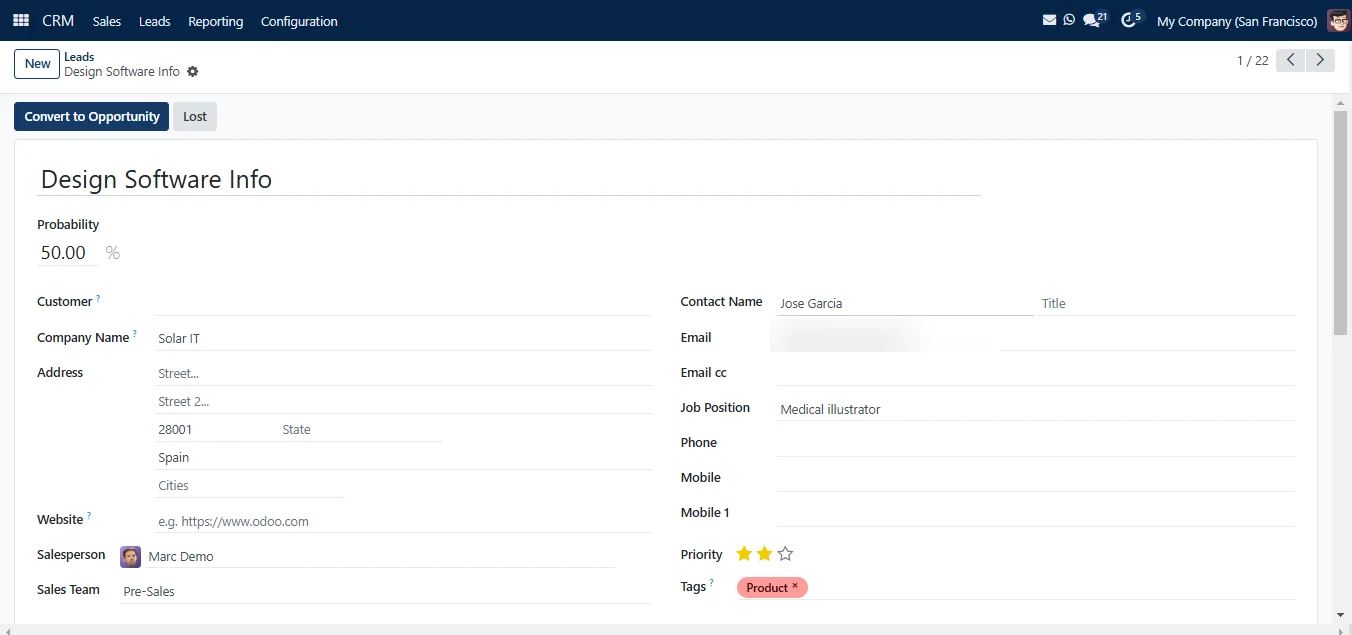
Leads into one pipeline. Connect IndiaMART, TradeIndia, JustDial, Meta forms and WhatsApp so every enquiry gets a named owner and a next step. In Sales Automation Suite, the pipeline stages are New, Qualified, Proposition and Won.
Quotations from the lead. Create the quote on the same record. Stop retyping product lines into a sheet.
Stock before the promise. Check availability before you confirm a delivery date. If you manufacture, the sales order should be visible to production without a separate email.
Order and billing in the same system. Convert the accepted quotation without starting from a blank form. Keep the source on the customer so reports can answer which channels produced revenue.
Assignment matters as much as import. If leads pile in a shared queue, the day-off problem returns. Rule-based assignment — by product, city or team — puts each lead with a salesperson without manual sorting. SAS documents this in its rule-based assignment guide (checked 13 Oct 2026).
How does Sales Automation Suite fit when you have outgrown CRM?
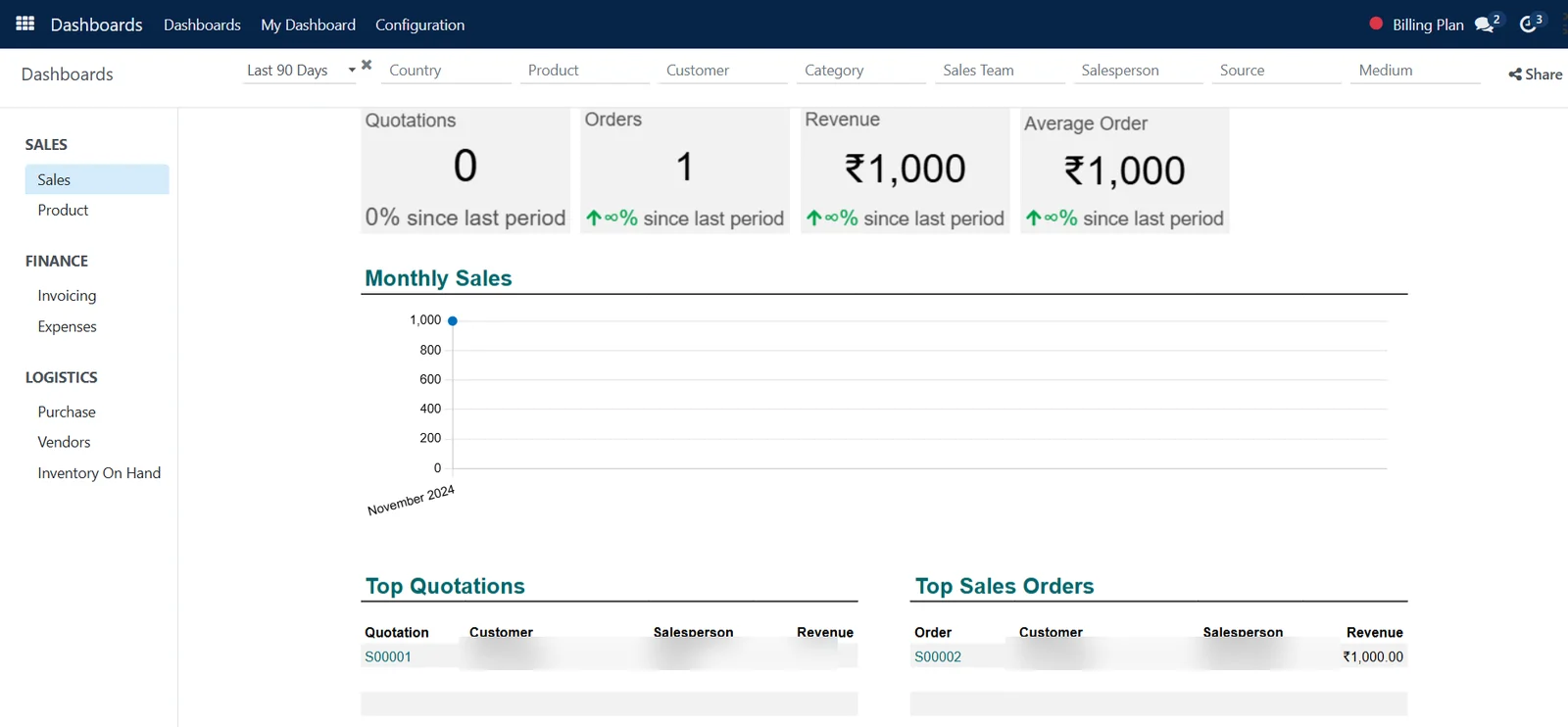
Sales Automation Suite (SAS) from Peanut Square is an ERP and CRM built for how Indian B2B businesses sell. The fit: India B2B sellers who outgrow a CRM-only stack get one INR-priced ERP+CRM with India lead portals and WhatsApp on the pricing page — Cloud or On-Premise.
According to the SAS pricing page (checked 13 Oct 2026):
Integrations listed include IndiaMART, TradeIndia, JustDial, Meta forms, and Free WhatsApp Automation.
CRM and sales features listed include Lead Import, Funnel, Assignment, Interactions, Follow-ups, plus Quotations, Proforma Invoices, Sales Orders, and Billing.
Operations on the same plan include Inventory (multiple stores, batches, min levels) and production-related items such as BOM and production jobs.
The SAS home page (checked 13 Oct 2026) lists modules including CRM, sales, inventory, manufacturing, and POS, and offers Cloud or On-Premise deployment. It also states ISO 9001:2015 and ISO 27001:2022 certification (badges and structured data on the home page, checked 13 Oct 2026).
On price: ₹300 per user per month on Premium, after a listed 40% off ₹500. GST extra, billed yearly, and the discount is valid for 12 months for the initial users ordered. Source: pricing page, checked 13 Oct 2026.
SAS keeps the pipeline — New, Qualified, Proposition, Won — and extends it so a Proposition can be stock-checked and billed in the same system.
When should a growing business move from CRM to ERP?
When the CRM no longer holds the real sell motion: leads stall when a key person is away, quotes and stock live elsewhere, India portals feed separate inboxes, and you cannot tie orders back to lead sources. That is the practical meaning of having outgrown CRM.
What does "outgrown CRM" mean in practice?
It means the CRM is still useful for contacts and stages, but the work that closes deals — WhatsApp history, quotations, inventory and orders — happens outside it. The day-off test is a quick check: if leads wait when one salesperson is out, the system has not kept up.
Is ERP the same as replacing my CRM?
No. ERP+CRM keeps CRM work — leads, assignment, follow-ups — and adds the operational steps that turn a qualified lead into an order. You extend the system of record; you do not throw away pipeline habits that already work.
Do I need manufacturing and POS on day one?
Only if they match how you fulfil. Many India B2B sellers start with leads, quotations, inventory and orders, then add manufacturing or POS when those steps are part of what they promise buyers. SAS lists CRM, sales, inventory, manufacturing and POS on the home page (checked 13 Oct 2026).
Can IndiaMART, TradeIndia, JustDial, Meta and WhatsApp feed one pipeline?
Yes, if your product lists those integrations. SAS names IndiaMART, TradeIndia, JustDial, Meta forms and Free WhatsApp Automation on the pricing page (checked 13 Oct 2026). See IndiaMART CRM integration and WhatsApp CRM automation.
Cloud or On-Premise — does that matter for this decision?
It can. Some teams want managed cloud hosting. Others need data on their own servers. SAS sells both paths on the home page and names On-Premise on the Enterprise plan (checked 13 Oct 2026). Choose deployment for compliance; choose ERP+CRM for the lead-to-order path.
It means the CRM is still useful for contacts and stages, but the work that closes deals — WhatsApp history, quotations, inventory and orders — happens outside it. The day-off test is a quick check: if leads wait when one salesperson is out, the system has not kept up.
It means the CRM is still useful for contacts and stages, but the work that closes deals — WhatsApp history, quotations, inventory and orders — happens outside it. The day-off test is a quick check: if leads wait when one salesperson is out, the system has not kept up.